Pendant, ring, bracelet or earrings: match jewellery to daily habits
The jewellery we reach for most often tends to have one thing in common.
It feels like part of us.
A necklace that settles comfortably against a favorite sweater. A ring that reminds us of someone dear. A pair of earrings that quietly completes an everyday look.
Beautiful jewellery catches our attention. Comfortable jewellery earns a place in our routine.
So, how do you choose jewellery for daily wear that offers both?
The answer begins with understanding the way you live.
Why Your Daily Routine Matters
Before choosing a piece of jewellery, think about an ordinary day.
Not a special occasion or a carefully planned evening.
A regular Tuesday.
You might spend hours at a desk, prepare meals, care for family, work outdoors or move between meetings.
Each routine places different demands on the jewellery you wear.
A ring may feel natural to someone who enjoys seeing a meaningful design throughout the day. Someone who frequently wears gloves or works with their hands may prefer a pendant.
There's no universally perfect option.
The best choice is one that suits your habits, feels comfortable and carries a meaning you'll appreciate.
Let's look at four possibilities.
1. Pendants: Meaning Close to the Heart
A pendant is a lovely starting point for someone who enjoys jewellery but prefers to keep their hands free.
It can sit quietly beneath a blouse or become a subtle focal point against a simple sweater.
For those drawn to Irish heritage, a pendant can also carry a personal connection.
Consider the Claddagh, with its familiar hands, heart and crown representing friendship, love and loyalty.
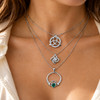
A Claddagh necklace allows its wearer to carry those values close to the heart without needing to wear a ring.
Before choosing a pendant, consider:
- Does the chain length suit her usual necklines?
- Is the clasp comfortable to fasten?
- Will the pendant sit naturally during everyday movement?
- Does she prefer delicate details or a more noticeable design?
A shorter chain may complement an open neckline, while a longer chain can work beautifully over knitwear.
For anyone who regularly handles equipment or works near moving machinery, a necklace should be removed when it could catch or create a hazard.
The right pendant should feel comfortable rather than become something she constantly needs to adjust.
2. Rings: A Personal Reminder Throughout the Day
There's something especially intimate about a ring.
Unlike earrings or necklaces, it's often visible to the person wearing it.
A quick glance can bring a memory to mind.
Perhaps it represents a marriage, an important milestone or a connection to family heritage.
Celtic knotwork offers a beautiful visual language for that idea.
Interlacing patterns have a long history in Irish decorative art, including early medieval manuscripts and metalwork. Today, many people personally associate unbroken knot designs with lasting bonds and continuity.
But appearance is only part of choosing a ring.
Comfort and fit matter just as much.
A ring should fit securely without feeling uncomfortably tight. Its height, width and decorative details can also affect how naturally it fits into someone's routine.
Think about whether the wearer frequently works with their hands, wears protective gloves or handles heavy equipment.
Rings should generally be removed during activities that could damage the setting or cause an injury.
For someone who loves the symbolism of a ring but has an active routine, it might be better suited to selected moments rather than every task.
3. Bracelets: A Connection That Moves With You
A bracelet can become a familiar part of everyday style.
It might sit beside a watch or be worn alone as a quiet finishing touch.
For someone who enjoys subtle jewellery, a bracelet featuring Celtic-inspired details can offer meaning without needing to be the centerpiece of an outfit.
But bracelets have their own practical considerations.
Wrist movement, sleeve length and daily activities all influence comfort.
If someone spends hours typing, a large bracelet or dangling charm may become distracting.
Someone who frequently works with their hands may prefer a simpler design that's easy to remove and store safely.
When considering a bracelet, look at the clasp, length, weight and how its details sit against the wrist.
The ideal piece should move comfortably without feeling overly loose.
And while a bracelet may seem like a small choice, it's worth remembering that daily comfort is part of thoughtful design.
4. Earrings: A Familiar Finishing Touch
For many women, earrings are the final step before leaving the house.
A favorite pair can feel as familiar as a watch or a treasured scarf.
Earrings can also offer a comfortable alternative for someone who doesn't particularly enjoy rings or bracelets.
The key is understanding her preferences.
Does she usually wear small studs? Does she enjoy a little movement from drop earrings? Does she prefer understated designs that complement almost everything?
Consider the earrings' weight, fastening style and how they interact with her hair, glasses or daily clothing.
For someone who enjoys Celtic details, a modest knot-inspired design may offer an elegant way to reflect that connection.
But don't assume that smaller always means more comfortable.
The fastening and overall fit matter, too.
If you're choosing earrings as a gift, take a moment to notice the pairs she wears most frequently.
Her existing collection may tell you more than any jewellery trend.
How to Choose Jewellery for Daily Wear: Try This Simple Exercise
Before deciding which type of jewellery feels right, observe your routine for three ordinary days.
Ask yourself:
Day One: Comfort
Which pieces did you wear without needing to adjust them?
Day Two: Practicality
Did any jewellery get in the way of your work, clothing or activities?
Day Three: Connection
Which piece did you enjoy wearing most, and why?
You may discover that a pendant feels more natural than a bracelet, or that a familiar pair of earrings works with nearly everything you own.
You may also realize that your most meaningful piece doesn't need to be worn constantly.
Sometimes, choosing when to wear something becomes part of caring for it.
A Few Everyday Jewellery Care Habits
Even jewellery intended for frequent wear needs attention.
A little care can help preserve its appearance and protect delicate details.
Before applying perfume, hairspray or lotions, allow those products to settle before putting on jewellery.
Remove pieces before swimming, strenuous exercise, gardening or household cleaning that involves chemicals.
After wearing jewellery, gently wipe it with a suitable soft cloth and store it separately to help prevent tangles and scratches.
Cleaning methods should always match the specific metal, finish and gemstones involved. Not every stone or setting is suitable for soaking, ultrasonic cleaning or the same polishing products.
If you're unsure, consult the jewellery's care instructions or a qualified jeweller.
Think of these habits as part of looking after something meaningful.
Care isn't simply about keeping jewellery beautiful today.
It's about making it easier to enjoy for years to come.
Choosing Jewellery With Meaning
Celtic jewellery often appeals to people who want something more personal than an everyday accessory.
A Claddagh may reflect love and loyalty.
An interlacing knot may become a personal reminder of family connections that endure across distance.
A piece might also recall a beloved relative, a special journey or a story that deserves to be remembered.
These personal associations don't have to be presented as ancient historical meanings to matter.
The beauty of a meaningful piece is that its story can continue growing with the person who wears it.
Whether you choose a pendant, ring, bracelet or earrings, begin with the same question:
Will this piece feel at home in my life?
If the answer is yes, you're already making a thoughtful choice.
Frequently Asked Questions
What type of jewellery is best for daily wear?
There isn't one best category for everyone. Pendants can be practical for people who prefer keeping their hands free, while smaller earrings may suit those who dislike jewellery around their wrists. The right choice depends on comfort, activities and personal preference.
Can Celtic rings be worn every day?
Many rings can be worn frequently, provided the fit, construction and materials are appropriate. Remove rings during activities involving impact, heavy equipment or chemicals, and follow the specific care instructions for the piece.
How do I choose everyday jewellery as a gift?
Notice the jewellery the recipient already wears. Pay attention to metal colors, preferred sizes and whether necklaces, earrings, bracelets or rings feature most often in their routine. Choose a meaningful design that complements those habits.
The jewellery we treasure most doesn't always make the loudest statement.
Sometimes, it simply becomes part of our everyday story.
Explore more Celtic heritage stories and discover the meaning behind the symbols we carry.
-
Posted in
Celtic jewellery, everyday jewellery, gift guide, jewellery care